| The Great Pyramid of Giza |
|---|
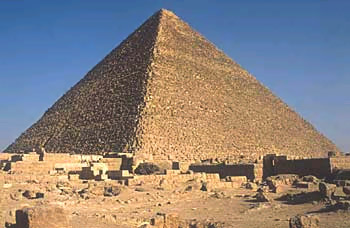
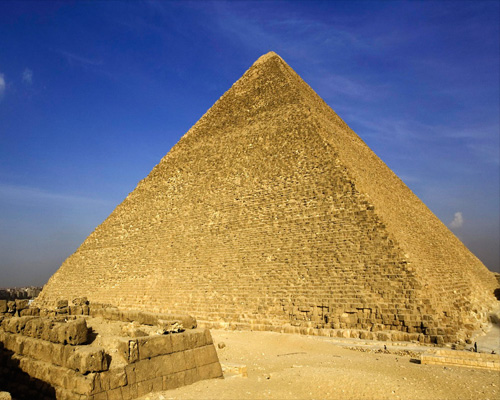
| The Great Pyramid of Giza is the only standing Wonder of the Ancient World, so there is no new structure or srurcture built upon the location it stood, unlike many of the other wonders. Construction of the 756 feet long and wide 450 feet high pyramid began around 2560 B.C. and lasted for some 20 years. Because of when it was built it is the oldest of the Wonders of the Ancient World, being 4,570 years old. It is composed of 2,300,000 blocks weighing about 2 1/2 tons each. Each block is within 8 inches in size difference despite the limited tools the builders had, and each point of the pyramid is prefectly aligned with magnetic north, magnetic south, east, and west. The workforce used to make it was 100,000 oppressed slaves. The only pyramid on the list os the Great Pyramid of Khufu, not all three of the Great Pyramids. It is also noted that the three pyramids can be used for the observation of the transit of certain stars across the sky. [1] [2] |
| Khufu, the pharaoh in which the pyramid was erected for, was the son of Snefru and the second ruler of the fourth dynasty. The pyramid is the largest of all the Egyptian pyramids. It contains 3 burial chambers, one underground carved into the bedrock, the second, called the queen's chamber, was first thought to be the burial place for one of his wives, but now is thought to have been a place for a sacred statue of him, and the third, the king's chamber, houses a red, granite sarcophagus placed at almost the exact center of the pyramid. It does not, however, have a lid. [3] |
| The Pyramid remained the tallest buinding in the world from the time of its completion to the 19th century. It originally had a limestone covering, but had been removed and was used by the Arabs to build in Cairo. They also attempted to disassemble the pyramid itself, but stopped at 30 feet once they realized the impossible task they were taking on. The treasure of Khufu has yet to be found and his missing lid as well as his mummy are missing too. The pyramid was also probably used for astronomical observation. [4] [5] |
 |
 |
 |
| Last Updated: 11-17-2010 by William |